
College Park Directory Starting Points
College Park people directories work best when chosen by context. The city's own portal lists employees and elected officials. University of Maryland tools cover faculty, staff, affiliates, and some department members. Civic rosters identify association officers, while state and county record systems can function as narrow name directories for owners, deed parties, estates, businesses, and licensed professionals. Historical names call for the Maryland State Archives and a chain of dated indexes.
| Directory source | People included | Record keeper | How to use it |
|---|---|---|---|
| College Park staff portal | City employees and elected officials | City of College Park | Free category browse or name search |
| UMD central directory | Faculty, staff, sponsored affiliates | University of Maryland | Public search; student results require login |
| College Park civic roster | Association presidents and watch coordinators | City of College Park | Free officer listing, not a member list |
| SDAT property records | Assessed owners at known addresses | Maryland SDAT | Free, but address-first rather than owner-name search |
| Business and license portals | Entity agents and licensed professionals | Maryland agencies and boards | Free official searches |
| Archives name indexes | Historic deed parties, voters, and named persons | Maryland State Archives | Online catalog, digital images, microfilm, and reading room |
No verified official directory lists all current College Park residents. Nor was an alumni-wide public UMD directory confirmed. That boundary matters: start with the person's public role, institution, property address, profession, or historical period, then use the source built for that fact.
Inside College Park's Staff Directory
The College Park directory can be browsed by category or searched with a first or last name. Categories span City Hall, the City Clerk, Finance, Planning and Community Development, Public Services, Public Works, youth and senior services, Mayor and Council, and all four council districts. Entries vary in depth. A basic result may provide work contact details, while a manager or elected profile may add a portrait, biography, appointment history, affiliations, education, district, or video.
| Name | Employee or elected official's displayed name |
|---|---|
| Role | Title, office, department, or council district |
| Contact | Work email, phone, and any additional phone |
| Profile detail | Some entries add a portrait, biography, prior work, or affiliations |
The captured city portal shows the category and name controls before a search. Open the live College Park staff directory to check the current listing.
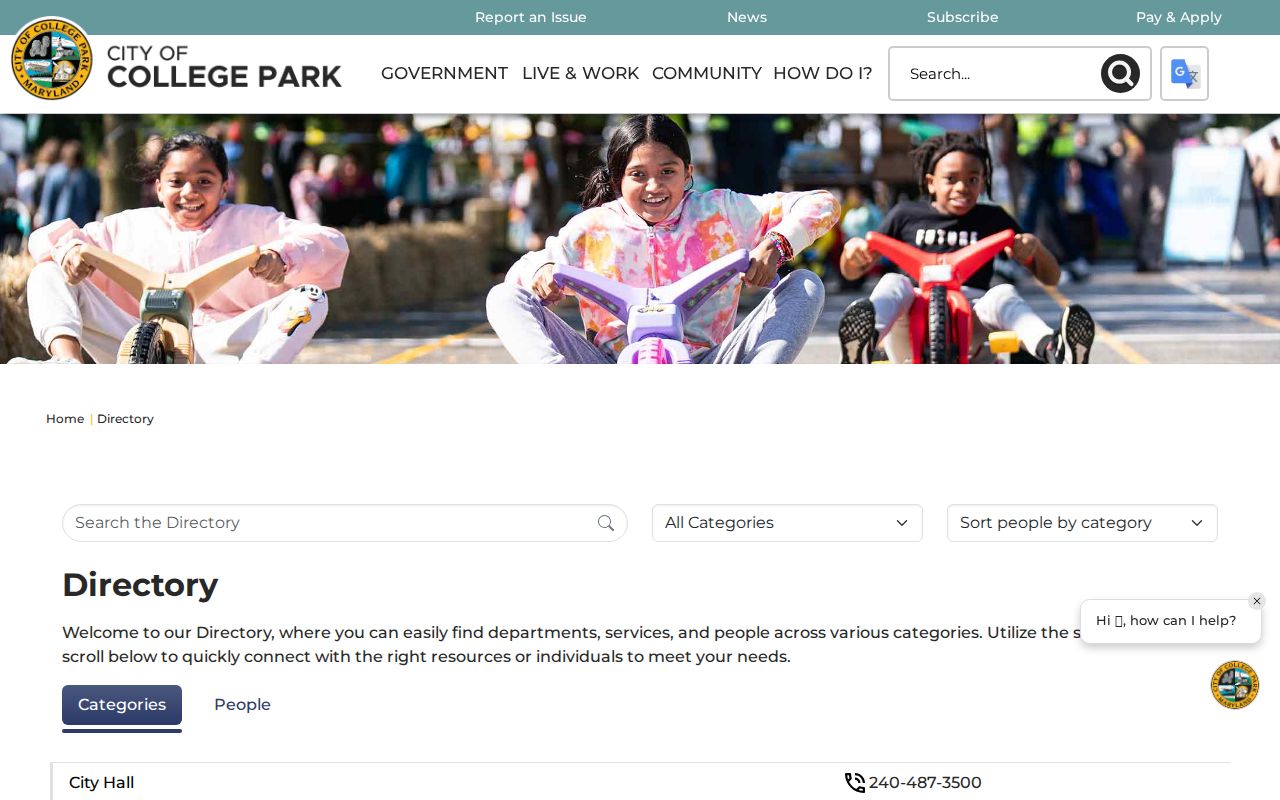
The screen confirms that browsing by office is possible even when a full name is not known. If no entry appears, call the relevant department or the City Clerk rather than assuming the person has no city role.
College Park UMD Directory Search
The UMD central directory is the main institutional people directory. Its public side covers faculty, staff, and sponsored affiliates. A basic query takes first and last name and offers a last-name sound-alike option. Advanced search adds middle name, email, work phone, affiliation, and institution. Student searching sits behind a university login and remains subject to privacy settings, so the public tool is not a campus-wide resident list.
| Search control | Input | Directory note |
|---|---|---|
| Basic name | First and last name | Last name can use “Sounds Like” |
| Advanced identity | First, middle, last, email | Useful for common names |
| Work phone | Phone number, up to 32 characters | Institutional contact field |
| Affiliation | Faculty, Staff, Affiliate | All three are checked by default |
| Institution | UMD or USMO | UMD is checked by default |
The central search capture makes the public and gated paths visible. Use the current UMD directory form for live results.
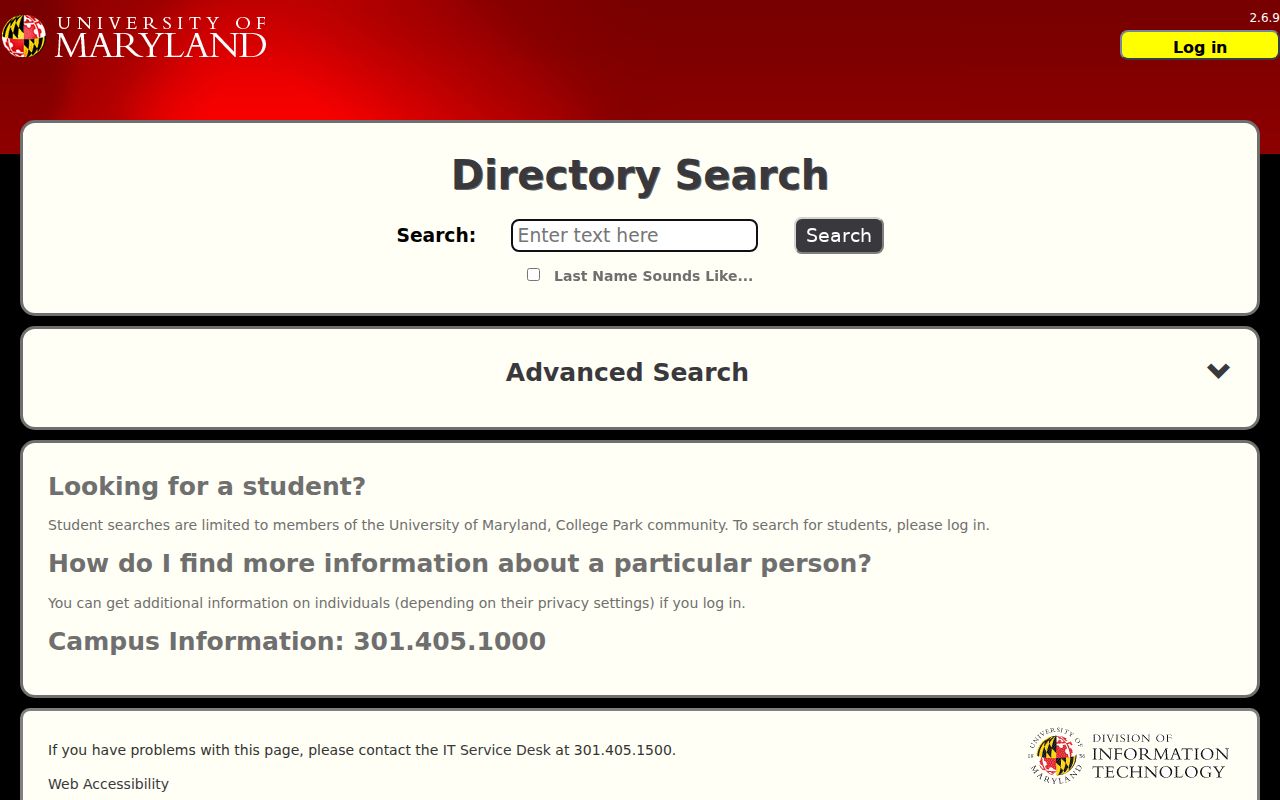
A public match may show work email, phone, and office. When the central result is sparse, the person's department can supply a richer academic profile.
Note: College Park's large campus population makes middle initials, departments, dates, and office locations useful for separating people with similar names.
UMD Department Directories Add Detail
Department directories often carry facts that the central record does not. The UMD English directory, inspected with 291 results, supports name or keyword search, an A-to-Z browse, a role filter, and a research-expertise filter. Entries may identify faculty, staff, graduate members, or emeriti. One inspected profile showed an emeritus professor's name, title, Tawes Hall room, phone, and email, though other entries omit some contact fields.
That difference is useful. A central directory confirms institutional affiliation; a department page can explain the role, office, specialty, and academic status. Other UMD units organize their listings differently. Art includes faculty, staff, alumni, and graduate students, while Computer Science separates faculty, staff or business units, graduate members, and research-area phonebooks.
The captured English directory illustrates this role-rich format. Browse the live department directory to see current filters and entries.
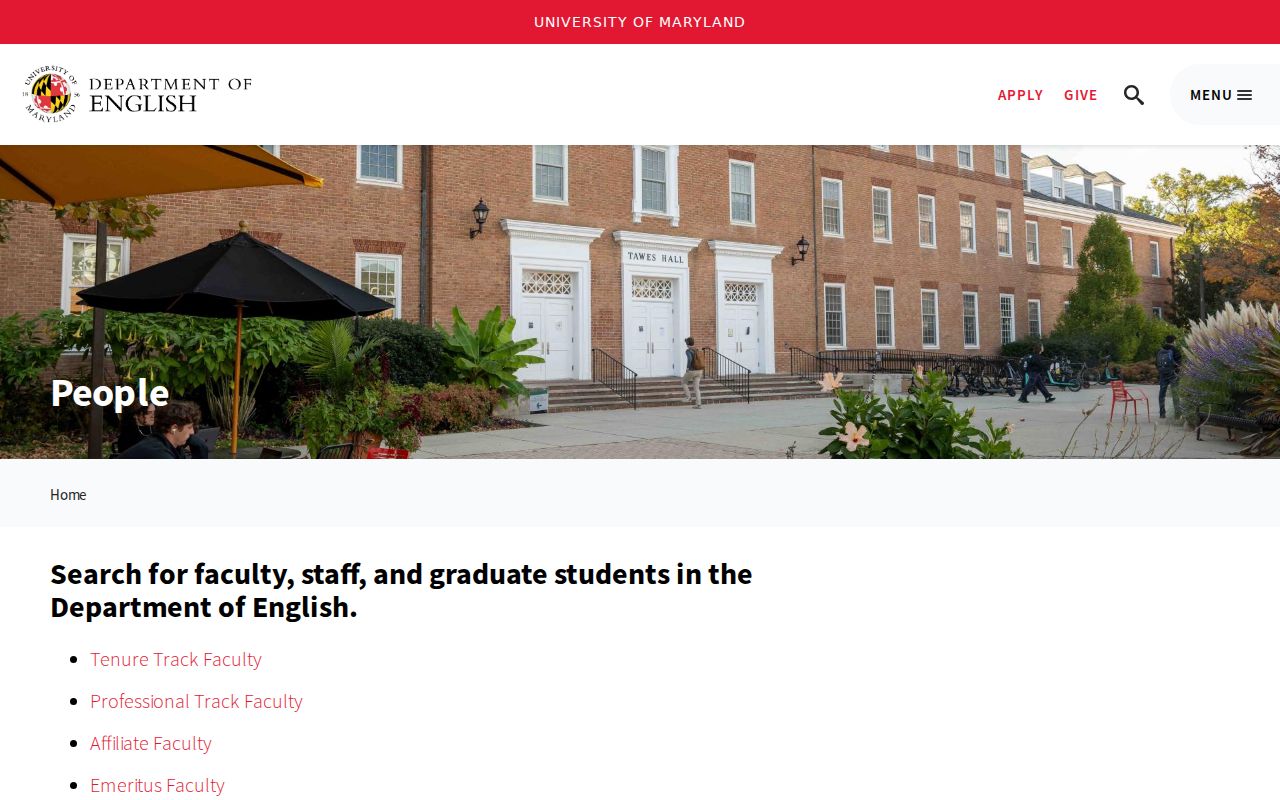
The visible filters show why a department lookup can resolve a common name more cleanly than a broad campus search.
College Park Civic Officer Directory
College Park identifies 17 neighborhoods and publishes selected civic contacts through its Neighborhoods roster. The list includes association presidents for places such as Berwyn, Calvert Hills, College Park Estates, Lakeland, North College Park, Old Town, West College Park, and Yarrow, along with Metropolitan groups and several neighborhood watch coordinators. It answers “who represents this civic group,” not “who lives on this street.” Private members are not listed.
The city roster image captures the public officer contacts. Check the official neighborhood page because officers may change.
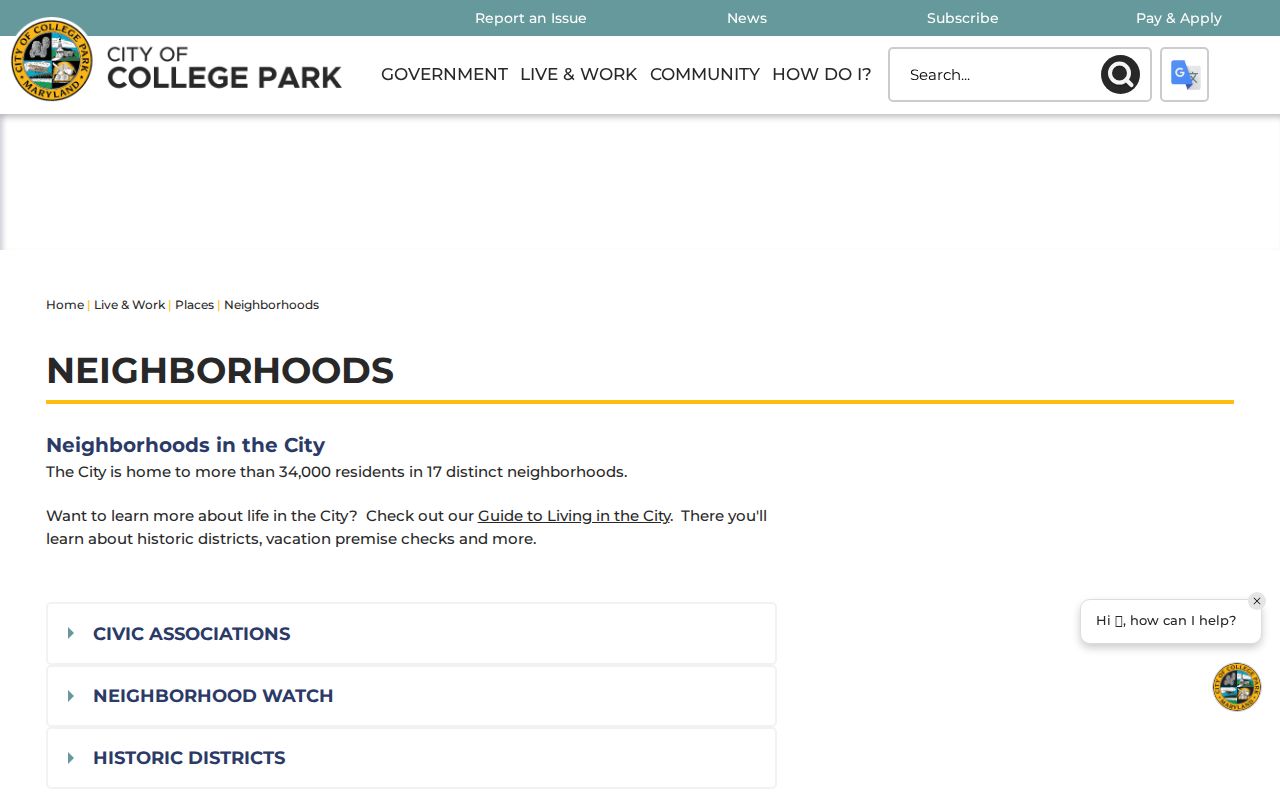
The roster supplies a direct civic contact without presenting the association as a directory of residents. For an unknown neighborhood, the city's address-based My Neighborhood tool can first identify the likely association and council representative.
College Park Property Directories Start With Address
The Maryland SDAT Real Property Data Search displays assessed owners, but it does not accept an owner's name as a search field. Choose Prince George's County, then search by street address, account identifier, sales, or map reference. Address search requires the street name; direction and suffix should be left out, and a trailing asterisk can broaden the text. This makes the roll an address-first directory rather than a name-first people directory.
A parcel result can show one or more owners, mailing and premises addresses, deed liber and folio, legal description, subdivision details, assessment data, and a map link. “Liber” means the deed book; “folio” is its page. The owner's mailing address may differ from the College Park premises, and a Principal Residence flag is not proof that someone is present now.
PGAtlas adds parcel boundaries and planning geography, while MDLandRec provides the indexed land instruments through a free account. The County Finance tax inquiry adds bill and tax status. Each tool answers a different question, so no one result should be treated as a complete resident profile.
College Park Professional Name Directories
Maryland's official business and licensing systems offer role-specific directories when a person is connected to an entity or regulated profession. Business Express Entity Search accepts a business name, Department ID, or EIN. A filing may identify the entity or trade name, type, status, principal office, resident agent and address, amendment history, and a trade-name filer. Active corporations since 1982 are represented, with weekday updates.
Professional boards maintain separate searches. Verified research paths cover physicians, nurses, lawyers, real estate licensees, home-improvement professionals, cosmetologists and barbers, and teachers. Search the board tied to the claimed role, then compare the displayed credential and status with the person's other known facts. Maryland OneStop is a useful starting hub, but board-specific verification is often the final authority.
- Maryland physician profile search
- Maryland nursing license lookup
- Maryland attorney search
- Maryland educator certification lookup
No comprehensive official College Park business-owner or chamber-member directory was verified. Entity records, county permit sources, and professional boards are the supported alternatives.
Lakeland Names Become Family Evidence
The Lakeland Legacy Member program shows how people directories can support a human claim rather than mere contact. The city says urban renewal from the 1960s through the mid-1980s displaced 104 of 150 households. Eligibility can reach descendants through a parent, grandparent, or great-grandparent when the underlying residence and age terms are met.
For a family reconstruction, an old Lakeland address can lead to a deed or map, then to a census or dated index, and finally to vital or family documents that establish kinship. That sequence preserves the difference between a directory mention and proof. A name in an index points toward the record; the record itself supplies the date, relationship, transaction, or address needed for the next link.
Note: The researched city application window is May 1 through October 30, 2026; confirm current dates with the program before applying.
Historical College Park Name Directories
Historical College Park people directories are often record indexes rather than bound residential volumes. Prince George's County land books begin in 1696. Researchers must move through separate index spans: 1696 to 1840, 1840 to 1884, and a grantee index from 1884 to 1949 before using modern MDLandRec routes. A grantee receives an interest in land; a grantor transfers it. The Maryland State Archives also catalogs court, probate, vital, cemetery, and freedom-related series.
- Land index
- An alphabetical pointer from a person's name to a deed book and page.
- Reverse directory
- A printed tool arranged by address rather than surname.
- Repository handoff
- The point where a date range moves to a different index, format, or custodian.
- Reading-room record
- Material that may require an Archives visit or an onsite terminal.
One especially rare source is the Freedom Affidavits series. Its records may identify parents, former owners, and a route to freedom, which can help reconstruct African American families. The series is unindexed, and some images require Archives search-room terminals. Search collateral names and approximate years, not only one exact surname.
No authoritative catalog page was found for exact College Park printed city-directory, reverse-directory, telephone-book, obituary-index, or newspaper-microfilm years. Contact the local library for a holdings check, and do not substitute Washington or Baltimore directory years. The gap is a catalog limit, not evidence that a past resident was absent.
College Park Directory Gaps Did Not Burn
Prince George's County's historical record series are unusually complete. The Archives reports no courthouse fire, and tradition holds that British troops spared Upper Marlboro's records in 1814. Court records start in 1696, and several early land and court volumes survive. A failed name search is therefore more likely to signal spelling, date, format, or repository trouble than a burned-book gap.
College Park itself was incorporated in 1945. Earlier sources may file people under Branchville, Berwyn, Lakeland, Old Town, a rail station, or a subdivision name. Search those place labels alongside the surname. This matters in a city shaped by the railroad, streetcar, university, and airfield, where institutional and neighborhood names often predate the municipal label.
When an online index stops, use the next documented channel: historical index volumes and digital images, Archives microfilm or reading-room access, or the courthouse clerk for the official file. The city directory, UMD tools, civic roster, property systems, and archive catalogs form complementary directories, not one merged list.